

Press Release, 8 January 2026
At CES 2026 in Las Vegas, RemotiveLabs introduced a groundbreaking solution designed to eliminate one of the biggest bottlenecks in modern automotive development late-stage software and hardware integration. The company’s platform, RemotiveTopology, enables automakers to conduct integration testing up to 10 times faster than traditional hardware-based setups, bringing the industry closer to the long-coveted goal of “China speed” the ability to develop and deploy vehicles with unprecedented agility.
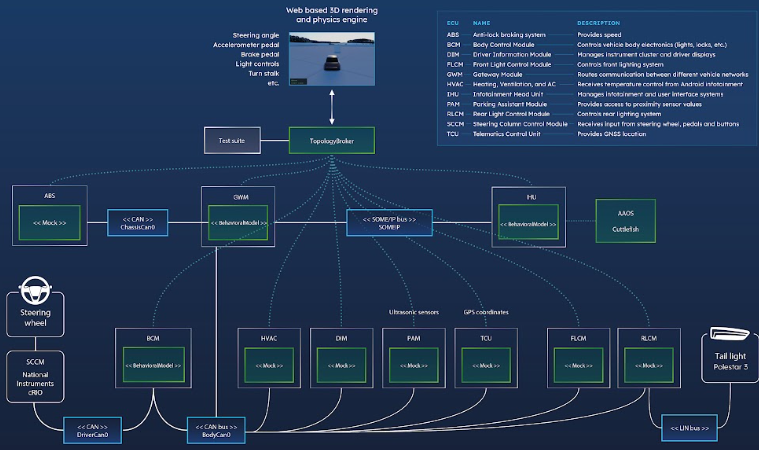
For years, legacy automakers have faced what engineers call “integration hell,” a costly and unpredictable phase that begins when software and electronic systems finally meet on hardware, often 12–18 months before production. RemotiveLabs aims to change that by allowing teams to validate entire vehicle systems virtually from day one. Through a shared virtual environment, developers can connect electronic control units (ECUs), zonal controllers, and central compute units using standard protocols like CAN, LIN, and Ethernet all without waiting for physical hardware.
This approach enables continuous integration and collaboration across teams, replacing traditional waterfall handovers with a single, real-time digital source of truth. As new hardware or detailed models become available, they can be seamlessly plugged in without rework, ensuring flexibility throughout development.
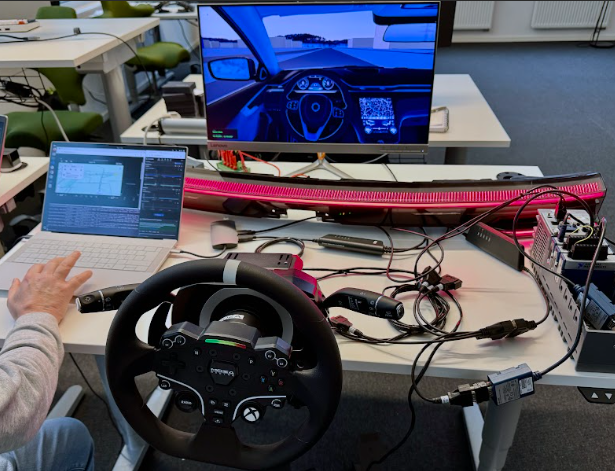
RemotiveLabs’ CES demo showcased this in action: an Android Automotive OS instance running in a fully virtual vehicle, simulating real-world sensor and actuator behavior. Developers can observe system-level behavior instantly, uncovering cross-domain issues in week one instead of year three.
According to Per Sigurdson, CEO and Co-founder of RemotiveLabs, this infrastructure “finally enables the development speed the software-defined vehicle era demands.” Customer studies reveal that virtualized validation not only accelerates testing but also transforms team collaboration, turning integration from a crisis-prone milestone into a routine, predictable process.
RemotiveLabs’ open-source vehicle model, available on GitHub, allows developers to get started within minutes—proof that virtual system integration is no longer theoretical but a practical, ready-to-use solution for next-generation vehicle programs.
Compiled using AI