
Press Release, 16 December 2025
As Europe accelerates investments in digital sovereignty across cloud, AI, and national communications infrastructure, one critical gap has remained unresolved: smartphones. Despite being central to daily life and essential for governments, emergency services, and critical industries, today’s phones still rely on opaque Android and iOS systems that cannot be fully audited or controlled. This creates systemic risk, where a single faulty update or hidden vulnerability can disrupt millions of devices at once. Until now, users seeking stronger control have had to sacrifice usability by switching to restrictive or alternative operating systems—an option few can realistically adopt.
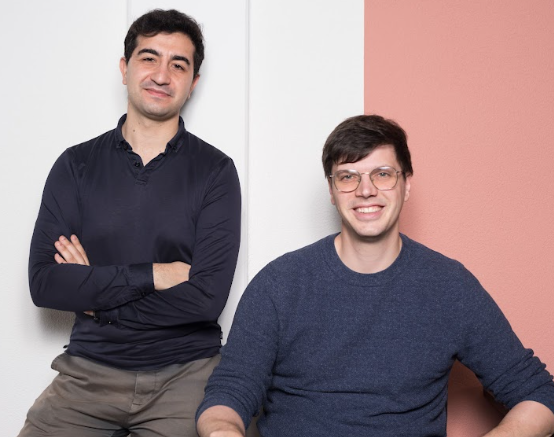
Swiss cybersecurity startup Soverli aims to change that equation. The company has raised USD 2.6 million in pre-seed funding to develop a sovereign smartphone architecture that works alongside existing Android and iOS systems. The funding round was led by Founderful, with backing from the ETH Zurich Foundation, Venture Kick, and cybersecurity experts, underscoring strong confidence in Soverli’s technical approach. Developed through more than four years of research at ETH Zurich, Soverli’s patent-pending technology allows multiple operating systems to run simultaneously and in isolation on a single smartphone. This enables a fully sovereign, customizable, and auditable operating system to operate in parallel with Android—without hardware changes or usability trade-offs.
In practical terms, users can retain the full Android experience while instantly switching to a secure sovereign environment when needed. As a proof point, Soverli demonstrated the Signal messaging app running inside its isolated OS, reducing the attack surface dramatically and keeping communications secure even if Android is compromised. Unlike existing secure-phone solutions, Soverli does not remove features, restrict apps, or require reboots between systems, making it suitable for real-world, everyday use.
The technology is already drawing interest from governments, enterprises, and public-sector organizations. Early pilots are focused on mission-critical communications for emergency responders and critical infrastructure operators, where continuity is essential even during system failures or cyber incidents. Journalists, human rights workers, and enterprises exploring secure bring-your-own-device programs also stand to benefit from isolated, protected environments on standard smartphones.
With fresh funding, Soverli plans to expand its engineering team, support more phone models, deepen mobile device management integrations, and scale partnerships with OEMs. Long term, the company aims to redefine how software is layered on smartphones, making true digital sovereignty practical and accessible on everyday devices.
Compiled using AI