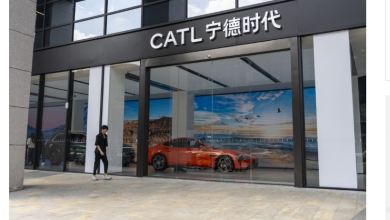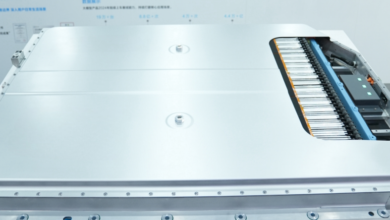
China has unveiled fresh restrictions on exporting lithium battery materials, sparking ripples across the global electric vehicle ecosystem — and putting Indian EV in sharp view.
Why China is tightening exports
Beijing’s move is part of a broader strategy to assert control over critical battery technology and minerals, which often straddle civilian and defense use. Starting November 8, 2025, companies will need export licenses for:
- High-energy lithium-ion cells & battery packs (≥ 300 Wh/kg)
- Key cathode precursor materials & LFP (lithium iron phosphate) compounds
- Graphite anode materials and related tooling
- Battery manufacturing equipment & processing technologies
By tightening the reins on these exports, China is safeguarding its dominance over battery raw material and tech supply chains — while forcing downstream players to either secure licenses or look elsewhere.
The shifting EV landscape
Near-term, Chinese battery firms saw share drops as markets reacted to the tightened rules. Reuters Global automakers and battery suppliers are now under pressure to rethink sourcing, diversify supply chains, and accelerate localization.
For India’s EV industry, the stakes are high. Companies heavily dependent on Chinese battery inputs could face cost inflation, supply delays, or licensing bottlenecks. Financial Express But this disruption also presents opportunity: regions outside China (including India) may now attract more investment and push for self-reliant battery and raw material infrastructure.
China’s export clampdown is more than a trade headline — it’s a sign that the EV supply chain is entering a phase of strategic realignment. And Indian EVs now must adapt in real time.