
Sony showcases next-gen automotive camera sensors using rFpro’s virtual simulation platform


Press Release, 7 October 2025
Sony Semiconductor Solutions Corporation has unveiled its next-generation camera sensor technologies for Advanced Driver Assistance Systems (ADAS) and autonomous vehicles (AVs) — not on the road, but in simulation. The company is leveraging rFpro’s AV elevate platform, a cutting-edge virtual environment that allows Sony to demonstrate and test its sensor performance before producing any physical prototypes.
This marks a major step in the ongoing partnership between Sony and rFpro, first announced in 2023. The collaboration focused on integrating highly detailed, physics-based sensor models into rFpro’s simulation software, resulting in more accurate virtual testing and reducing the need for extensive real-world data collection. By using AV elevate, Sony can now showcase its innovations earlier in the product cycle, speeding up development while maintaining high precision and safety standards.

According to Tomoki Seita, General Manager of Sony’s Automotive Strategy Department, the AV elevate platform has been instrumental in “accelerating innovation and enabling higher-quality products.” Seita added that strong technical support from rFpro’s Japan and Europe teams ensures smooth adoption and consistent performance.
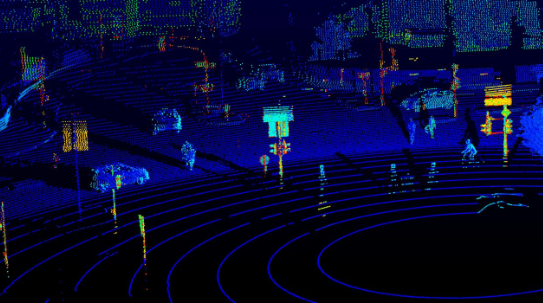
rFpro’s AV elevate platform is purpose-built for tuning, training, and validating ADAS and AV perception systems. It allows the generation of engineering-grade synthetic data and closed-loop testing of entire sensor and control stacks. This approach not only enhances development speed but also dramatically cuts costs and environmental impact by reducing dependence on physical testing.
Matt Daley, Technical Director at rFpro, said the collaboration highlights how simulation can push boundaries in sensor design. “Sony is redefining what’s possible in image sensing, and AV elevate lets them demonstrate this earlier and more efficiently,” Daley noted.
The partnership reinforces a broader industry shift toward simulation-driven vehicle development, where innovations can be validated virtually long before vehicles hit the road.