
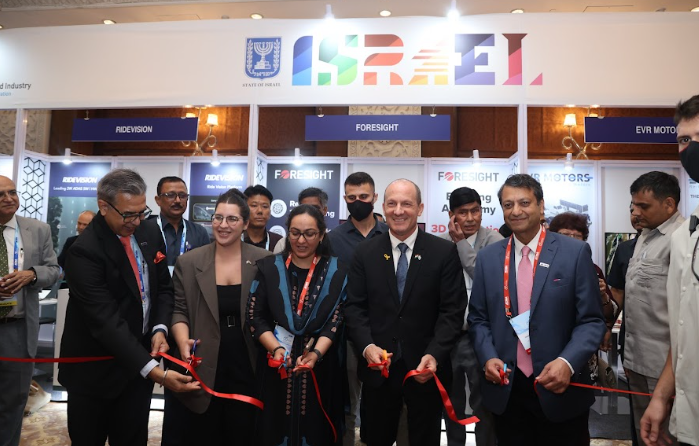
Press Release, 15 September 2025
What does it take to future-proof one of the world’s fastest-growing automotive hubs? At the 65th Annual Session of the Automotive Component Manufacturers Association of India (ACMA) in New Delhi, the answer was loud and clear: resilience, innovation, and global collaboration.
With policymakers, CEOs, and international trade leaders under one roof, the session set the stage for India’s next big leap — building a $200 billion auto component industry by 2030.
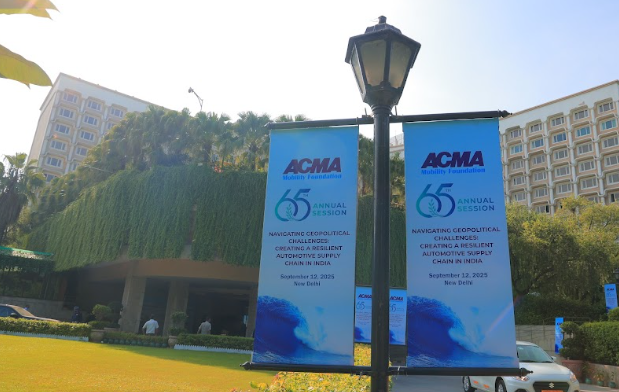
🌍 Setting the Theme: Resilience in a Volatile World
This year’s theme, “Navigating Geopolitical Challenges – Creating a Resilient Automotive Supply Chain in India”, couldn’t have been more timely. From shifting global trade flows to rising technology disruptions, the auto industry faces unprecedented challenges.
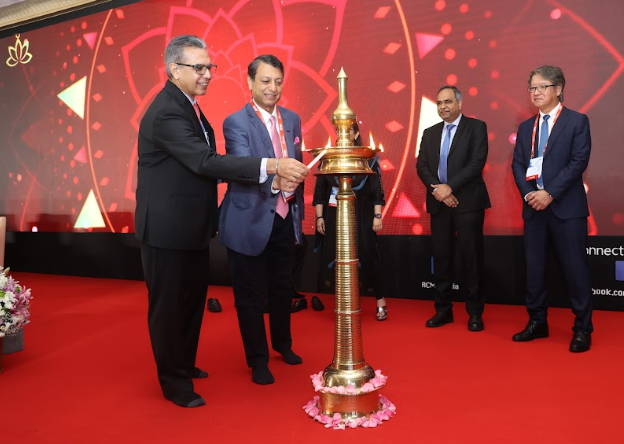
Opening the event, Shradha Suri Marwah, President of ACMA & CMD of Subros Ltd., struck an optimistic note:
“India’s auto component sector expanded beyond $80 billion in FY25, with exports crossing $23 billion — a testament to our growing reputation as a trusted global partner. Yet the road ahead demands greater resilience as we navigate geopolitical headwinds, technology disruption, and sustainability imperatives.”
📈 Big Reveal: ACMA–McKinsey Study on India’s Auto Future
One of the biggest highlights of the session was the release of the ACMA–McKinsey study, which forecasts:
- 📊 India’s auto component industry to hit USD 200 billion by 2030
- 🚗 Growth powered by robust domestic demand and expanding exports
- ⚡ Rising opportunities in both ICE parts and EV/connected vehicle solutions
- ⚠️ Risks from tariffs, carbon taxes, and reliance on rare earths/semiconductors
This roadmap signals a massive transformation for India’s mobility ecosystem.
🏛️ Policy Push: Government Leaders Back the Industry
The event brought together some of India’s most influential policymakers, each outlining bold steps to support the sector:
- H.D. Kumaraswamy, Minister of Heavy Industries & Steel:
“PLI has already attracted ₹29,500+ crore investments and created 45,000 jobs. With PM-eDRIVE boosting e-mobility across all vehicle categories, clean mobility is becoming accessible to all.” - Nitin Gadkari, Minister of Road Transport & Highways:
“Our goal is to make India the world’s hub for smart, safe, sustainable, and affordable mobility by 2030. With clean fuels like ethanol, hydrogen, LNG, and biofuels, we can build a greener, more competitive future.” - Piyush Goyal, Minister of Commerce & Industry:
“India and the EU are working towards a fair FTA. Reducing GST on auto parts to 18% is one step to formalize supply chains and fuel growth.” - Maroš Šefčovič, EU Commissioner for Trade & Economic Security:
“As India’s largest trading partner, the EU supports $140B in trade. Together, Europe’s tech and India’s scale can create resilient, climate-friendly mobility supply chains.”
🤝 Industry Leaders Weigh In
The fireside chats and panel discussions brought in voices from McKinsey, Sona Comstar, VW Group India, Bosch India, Hero MotoCorp, ZF India, Infineon Technologies, and more. The conversations centered on:
- Localizing critical tech to cut import dependence
- De-risking supply chains against geopolitical shocks
- Scaling EV and connected mobility solutions
- Strengthening India’s competitiveness in global markets
👥 Why It Matters: India at the Center of Global Mobility
With over 1,200 delegates in attendance — from policymakers to OEMs and global suppliers — the session reaffirmed ACMA’s role as the voice of India’s auto component industry.
The message was clear: India is no longer just a participant in global supply chains; it’s becoming a strategic leader shaping them.
🚀 The Road Ahead
By 2030, India could stand tall as a $200 billion auto component powerhouse, driving not only its own economy but also contributing to global clean mobility goals. The combination of policy reforms, private investments, and international partnerships is paving the way.