News, 4 August 2025
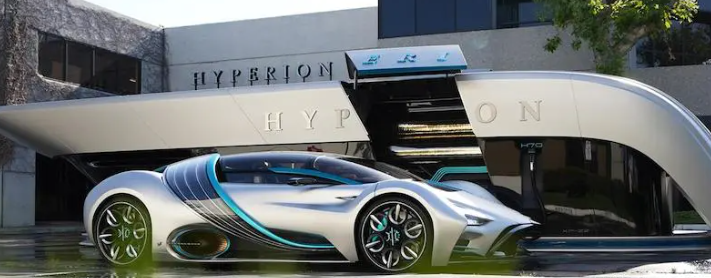
Imagine a silent supercar rocketing to 60 mph in just over 2 seconds, yet refueling in five minutes, not hours or worse, not at all. Imagine its only emission being water vapor. That’s exactly what the Hyperion XP‑1 prototype delivers- a hydrogen hypercar that’s designed not just to dazzle, but to change how we think about clean high performance.
From Energy Startup to Automotive Vision
Hyperion Motors Founder & CEO Angelo Kafantaris didn’t build the XP‑1 to make another Tesla rival he built it to tell a story about hydrogen’s potential. As he put it:
Unveiled in August 2020 as a part of Hyperion’s broader push into clean energy solutions, the XP‑1 remains one of the boldest statements in zero‑emission innovation—though full production has yet to begin.
A Tale of Bridging Dream and Reality
| Phase | Narrative Arc |
|---|---|
| Launch (2020) | XP‑1 debuts with sci‑fi looks and NASA‑inspired tech—an instant symbol of what hydrogen could be. |
| Engineering Peak | Built with carbon‑titanium monocoque, NASA‑grade supercapacitors, and solar‑blade aerodynamics. |
| Market Reality | Scheduled for limited production (300 units) in 2022, but stalled by COVID, supply chain woes—and the infrastructure gap. |
| Industry Ripple | Over 4 automakers (Porsche, Toyota) say they’re exploring hydrogen; others, like Ferrari, abandon the idea. Hyperion hopes to reignite interest. |
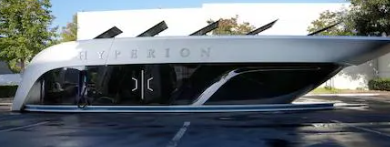
Built for the Future: Key Specs & Features
- ⚡ 2,038 hp delivered by four axial‑flux electric motors, one at each wheel
- 🏎️ 0–60 mph in approximately 2.2–2.25 seconds
- 🌍 1,016-mile range, thanks to three carbon‑fiber hydrogen tanks
- ⛽ Refuels in just 3–5 minutes—as quick as pumping gas
- 🎛️ Ultra‑light thanks to carbon‑titanium chassis, active solar wings, and supercapacitors, not batteries
- 💧 Silent, water‑only emissions, with no lithium battery required.
Unpacking the Human Angle & Industry Impact
1. The Visionary CEO
Kafantaris’ point is as simple as it is bold: hydrogen can unlock “better, cleaner mobility” for the high‑performance space and beyond. In his words,
He’s not promising mass adoption just a shift in perception.
2. Engineering from Space, Built for Earth
To stay light and powerful, Hyperion tapped ex‑NASA engineers to deploy supercapacitor energy systems adapted from aerospace tech. Their solar blades don’t just control airflow—they track the sun to generate power for onboard systems.
3. Infrastructure: The Key Weak Link
More than 90% of hydrogen pumps are in California, and only a handful are public. Limited refueling infrastructure remains the biggest barrier to mainstream hydrogen adoption.
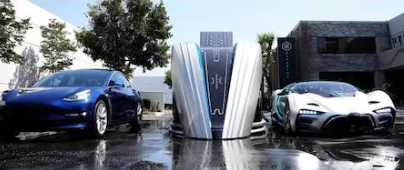
Yet Hyperion is tackling this head‑on, with plans like mobile solar‑powered Hyper stations that can fill XP‑1 vehicles—and even charge BEVs if needed.
Why It Could Go Viral
- The underdog effect: a small energy startup, not a legacy automaker, dares to reinvent the future
- Visual and emotional punch: sci‑fi design with solar wings, carbon craftsmanship, and a zero‑emission promise
- A narrative that matters: interweaves human ambition, climate urgency, and the thrill of speed
What We’re Still Waiting For
- 🧱 Car production still not confirmed for 2025
- ⛽ A real refueling network to support hydrogen‑powered hypercars
- 🌱 Watertight guarantees that hydrogen is green (especially its source) and not fossil‑fuel dependent
There are whispers One of seven development prototypes has already sold at auction—as a battery‑only variant raising questions on the future carbon footprint of the full XP‑1 lineup.
The Last Lap: Why It Still Matters
Even if the XP‑1 never makes it to production, it’s a powerful thought experiment coming to life: challenging the lithium‑battery narrative, reimagining hydrogen for high‑performance vehicles, and reminding us that zero‑emission doesn’t have to mean slow or uninspiring.
So next time someone says “hydrogen is dead,” share the story of the XP‑1. Share it because it’s not just about one car—it’s about an electric‑speed revolution, powered not by ore-mined lithium but by atomic number one.