
News, 15 July 2025
Tesla has opened its first showroom, referred to as a “Tesla Experience Centre,” in Mumbai, on July 15, 2025. It is located at the Maker Maxity Mall in the Bandra Kurla Complex (BKC), a prominent commercial hub in Mumbai.
The showroom features a sleek, minimalist, white-themed design, incorporating light boxes showcasing Tesla’s innovations alongside visuals representing Indian culture. The retail space spans approximately 4,003 square feet. This showroom will also serve as an “Experience Centre” for potential buyers to explore Tesla’s offerings, book test drives, customize cars, and place orders.
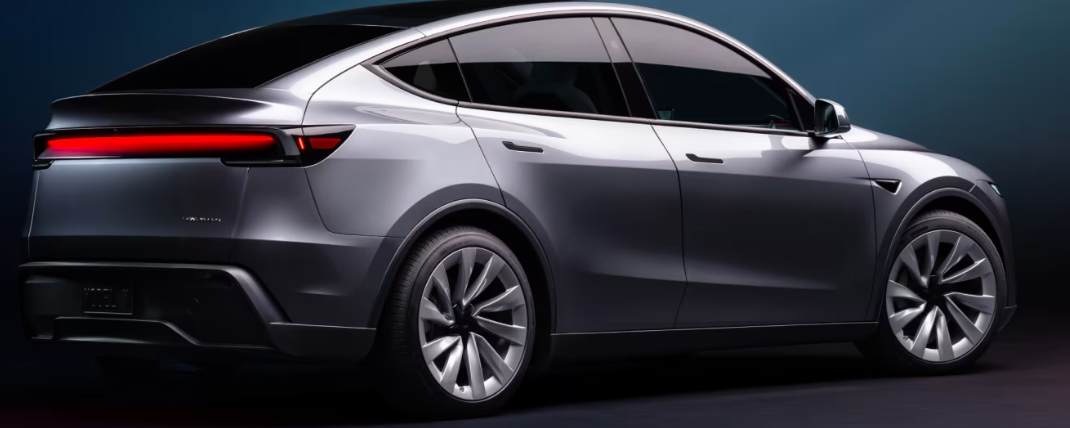
The Tesla Model Y is the first model launched in India and is available for display and demonstration. Model Y Rear-Wheel Drive (RWD) has been priced at ₹59.89 lakh (ex-showroom) and Model Y Long Range RWD at ₹67.89 lakh (ex-showroom). The Full Self-Driving (FSD) Package will cost an additional ₹6 lakh.
Indian pricing is higher than in other markets due to high import duties (70% on fully built EVs priced under $40,000). The Model Y will also be made available in Delhi, and Gurugram. Deliveries are expected to begin in September 2025.
Tesla is focusing on a retail-first strategy, starting with showrooms and importing vehicles (from its Shanghai plant) to gauge demand before committing to local manufacturing. They have no manufacturing plans as of now.
A History of High Hopes and Hurdles (2021-2023)
Tesla officially registered its Indian entity, “Tesla India Motors and Energy Pvt. Ltd.,” in Bengaluru in January 2021, sparking considerable optimism about its imminent launch. There was speculation about a local manufacturing plant, with various states pitching for the investment.
The primary stumbling block for years was India’s high import duties on fully built electric vehicles (EVs), which ranged from 70% to 100%. Elon Musk repeatedly voiced concerns, arguing that these duties made Tesla cars unaffordable for the Indian market and hindered their ability to “test the waters” before committing to a local factory.
The Indian government, on the other hand, maintained its stance that any significant duty relief would require a firm commitment from Tesla to set up local manufacturing facilities, aligning with its “Make in India” initiative. Domestic EV manufacturers also opposed any special concessions for foreign players without local investment.
Throughout 2022 and 2023, discussions between Tesla and the Indian government often reached an impasse. Elon Musk’s planned visit to India in April 2024 was ultimately postponed, signaling that a definitive agreement on local manufacturing and import duties had yet to be reached.
A Policy Shift and Formal Entry (2024-2025)
A breakthrough arrived in March 2024 when India unveiled its “Strategic Promotion of Manufacturing of Electric Vehicles Policy for Clean India” (SPMEPCI). This policy offered a significant reduction in import duties (to 15% from 70-100%) for EVs priced over $35,000, provided the company committed to: (1) Investing at least ₹4,150 crore (around $500 million) in India. (2) Beginning local production within three years. (3) Achieving 25% local value addition in three years and 50% in five years. (4) Limiting Completely Built Unit (CBU) imports to 8,000 units per year for five years.
This new policy proved to be the catalyst for Tesla’s long-awaited entry. In the first half of 2025, Tesla ramped up its recruitment efforts in India. Finally today, Tesla officially opened its first “Experience Centre” (showroom) in Mumbai’s Bandra Kurla Complex (BKC), marking its formal debut in the country. The Model Y is the first vehicle available for display and orders, with deliveries expected to begin in September 2025. A second showroom in New Delhi is anticipated to open by the end of July.
Current Strategy and Future Outlook
Tesla is currently pursuing a “retail-first” strategy in India, focusing on importing and selling its vehicles to gauge demand before making a firm commitment to local manufacturing. While the current pricing of the Model Y is significantly higher due to duties, Tesla’s entry is seen as a major boost to India’s EV ecosystem, potentially accelerating adoption and encouraging innovation from local and international competitors. The long-term success of Tesla in India will largely depend on its ability to navigate the price-sensitive market, build out its charging infrastructure, and eventually transition to local production to offer more competitive pricing.