
Press Release, 31 October 2025
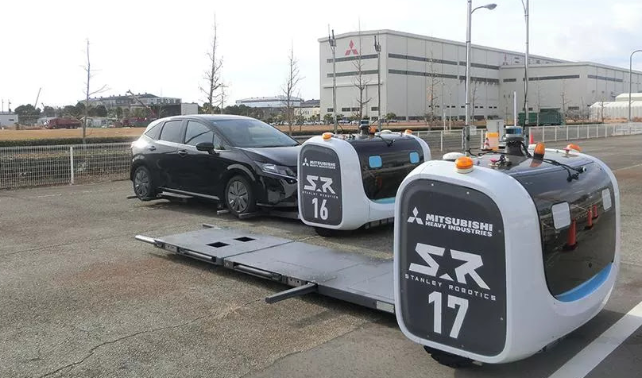
Mitsubishi Heavy Industries Machinery Systems (MHI-MS), a subsidiary of Mitsubishi Heavy Industries (MHI) Group, is set to begin demonstration testing of its autonomous vehicle transport robots in Okinawa starting December 1, 2025. The project, backed by Okinawa Prefecture’s Testbed Support Subsidy Program, aims to automate finished vehicle logistics (FVL) operations at the Nakagusuku Port motor pool in Uruma City.
The transport robots can autonomously move finished vehicles in motor pools, manufacturing plants, and parking facilities — even if the vehicles lack autonomous or connected features. This flexibility makes the technology suitable for both new and used cars, without requiring infrastructure overhauls or vehicle modifications.
MHI-MS has been co-developing this advanced automation solution with France-based Stanley Robotics since 2021. The company now holds seven core patents in Japan for automated transport robots and completed domestic customization of the system earlier this year. The Okinawa trial will focus on testing the technology’s ability to improve work efficiency, reduce physical strain on workers, and address Japan’s ongoing labor shortages in logistics.
The region’s high car ownership rate, active used-car export industry, and growing need for sustainable operations make Okinawa an ideal testing ground. The project also aligns with Japan’s decarbonization goals by potentially cutting CO₂ emissions through reduced manual driving of gasoline-powered vehicles.
Additionally, MHI-MS plans to integrate digital transformation (DX) elements — such as real-time yard management and vehicle tracking — to enhance operational transparency and efficiency.
By leveraging autonomous robotics, digital tools, and mechatronics expertise, MHI-MS aims to redefine how finished vehicles are stored, moved, and managed. The company sees this initiative as a step toward a more sustainable and human-centric logistics model — one that reduces labor pressures while supporting Japan’s broader mobility and climate ambitions.


