
Japanese researchers use network science to tame dangerous combustion instabilities


Press Release, 2 February 2026
In a study, scientists from Japan have introduced a mathematical approach to tackling one of the biggest challenges in gas turbine and aircraft engine design combustion instability. This phenomenon, caused by complex interactions between heat release, acoustic waves, and airflow, often leads to violent pressure oscillations capable of damaging engine walls and threatening safety.
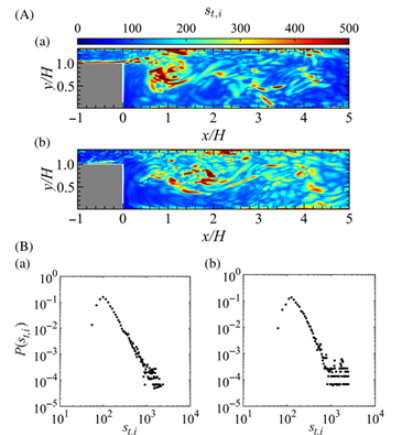
A team led by Professors Hiroshi Gotoda (Tokyo University of Science) and Ryoichi Kurose (Kyoto University) has applied network science to understand and control this instability in spray combustion systems. Their research, published in Physical Review Applied (July 2025), models turbulence as a “network” where each flow point acts as a node connected by vortex interactions. The analysis revealed a scale-free topology a structure dominated by a few key “hubs” that dictate the entire system’s behavior.
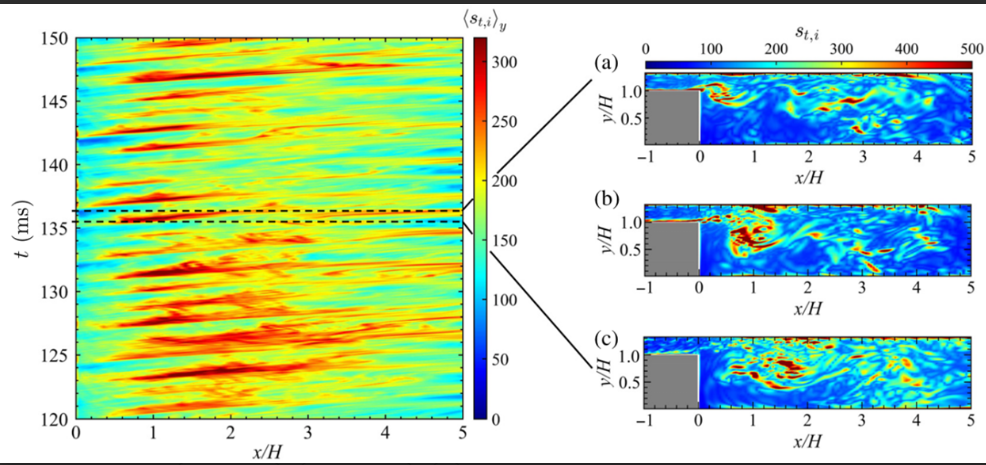
By identifying these critical “connector communities,” regions that drive instability, the researchers placed tiny physical obstacles to disrupt harmful vortex interactions. This intervention effectively reduced acoustic pressure fluctuations and stabilized combustion. The discovery not only deepens our understanding of turbulent flow dynamics but also offers engineers a practical blueprint to design safer and more stable combustors for turbines and aircraft engines.
This pioneering fusion of network science and combustion research represents a major leap forward in fluid dynamics, promising cleaner and more efficient energy systems. The team now plans to refine their model with new simulations to further optimize instability suppression a move that could redefine the future of sustainable power and aviation technologies.
Compiled using AI