
12th March 2026
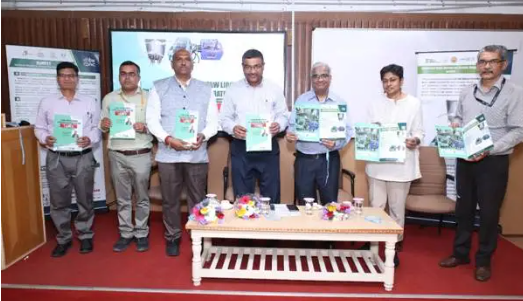
India has taken a major step toward strengthening its electric vehicle technology ecosystem with the launch of an indigenously developed 30kW Wide Band Gap (WBG)-based Integrated Drive System (IDS). The technology was unveiled by the Ministry of Electronics and Information Technology (MeitY) at the Indian Institute of Technology Madras in Chennai. Developed by the Centre for Development of Advanced Computing (C-DAC) in collaboration with IIT Madras and automotive component manufacturer Lucas TVS, the system has been built under the National Mission on Power Electronics Technology (NaMPET).
The newly launched IDS represents a significant milestone in India’s efforts to reduce dependence on imported electric vehicle powertrain technologies. Currently, many high-performance EV drive components and semiconductor-based systems used in the country are sourced from overseas. By developing this system domestically, the government aims to support localisation, lower costs for EV manufacturers, and strengthen the country’s power electronics capabilities. The 30kW power category is designed specifically for India’s growing electric passenger vehicle segment, including compact electric cars and shared mobility fleets that are rapidly expanding across urban markets.
Technically, the system integrates the electric motor and inverter into a single compact unit, replacing the traditional configuration where both components are housed separately. This integrated architecture helps increase power density and efficiency while reducing the overall size and complexity of the powertrain. The use of Wide Band Gap semiconductor technology also enables improved thermal performance and energy efficiency, making it suitable for next-generation EV platforms.
According to officials, the system has already been successfully designed, fabricated, and validated in collaboration with industry partner Lucas TVS, and is now ready for commercialisation and large-scale deployment. Widespread adoption could strengthen India’s EV supply chain by creating new opportunities for domestic manufacturing in areas such as power electronics, thermal management systems, and control hardware. The initiative also aligns with government programmes like the Production-Linked Incentive (PLI) scheme aimed at boosting local manufacturing and technological self-reliance.
By bringing together academia, research institutions, and industry partners, the project highlights India’s growing capability in advanced semiconductor-based mobility technologies and represents another step toward building a self-reliant EV ecosystem.
What is Integrated Drive System (IDS)
An Integrated Drive System combines several EV powertrain components into a single compact module. Instead of having separate parts, IDS integrates:
- Electric Motor – Converts electrical energy into mechanical motion to drive the wheels.
- Inverter / Motor Controller – Converts the battery’s DC power into AC power required by the motor and controls its speed and torque.
- Control Electronics – Manages energy flow, efficiency, and system performance.