
Honda, Tokuyama & Mitsubishi launch Japan’s first hydrogen‑powered data center using recycled FCEV fuel cells

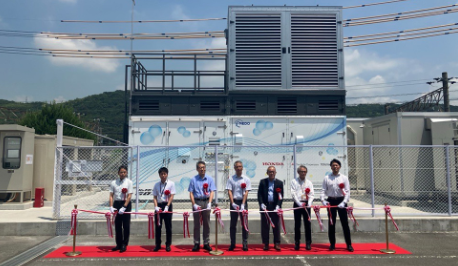
Imagine a data center running entirely on hydrogen created as a by‑product of industrial chemical processes, fueled by reused fuel cells once installed in Honda vehicles. That’s exactly what Honda, Tokuyama, and Mitsubishi Corp have unveiled in Shunan City, Yamaguchi, Japan, and today marks the official kickoff of their live demo ushering in a new chapter in clean energy, circular tech, and data‑center sustainability.
🔍 Why This Matters — A Human and Industry Story Across Four Threads
1. Out With the Old, In With the Bold
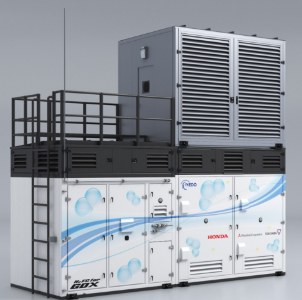
Honda has reclaimed fuel cells once installed in its CR‑V e models, repurposing this automotive technology into a clean‑power stationary fuel‑cell powerhouse. The coordinates of this transformation: a Tokuyama salt‑water electrolysis plant that produces by‑product hydrogen, and Mitsubishi’s nearby distributed data center that needs electricity. Double Japanese ingenuity.
2. A Grand Why: AI Needs Power (and Cleaner Sources)
As generative AI and automated services scale globally, data centers have become electricity gluttons. The IEA projects data center consumption to double by 2030, surpassing Japan’s entire annual power demand. This puts pressure on grids and urges solutions beyond solar or wind alone. Honda’s system delivers zero‑emission electricity, offering hydrogen‑based resilience to the digital storm.
3. Local Roots, Global Vision
This demo, backed by Japan’s NEDO, began planning in June 2023 and unfolds over 2025–26 across four real‑world use‑cases:
- Emergency backup power (within 10 seconds startup time)
- Off‑grid primary supply
- Peak shaving of grid usage
- Grid balancing (selling back surplus)
These will switch dynamically via an Energy Management System (EMS) that orchestrates hydrogen, grid, BESS (battery storage), and renewables.
4. Specs That Highlight the Story
Honda’s compact stationary FC power station (recycled from FCEVs) estimates:
- 250 kW units, up to four in series → 1 MW total
- Parallel expansion available
- Compliant with ANSI/CSA FC1, IEC 62282‑3‑100
- Operates reliably up to +45 °C, requires low noise (≤ 76 dBA at 7 m)
These numbers matter—not just for engineers, but for business leaders eyeing predictable, clean power at scale.
🔄 Powering Sustainability: Four Modes, One Mission
With Tokuyama’s stable hydrogen supply and Honda’s agile fuel-cell units, the project will test these core scenarios:
- Backup Power – kicking in within seconds to keep servers alive.
- Off‑Grid Primary Power – hydrogen stand-alone system.
- Peak Shaving – shaving costly grid peaks to lower energy bills.
- Grid Balancing – exporting surplus power back to the grid.
Each use‑case is controlled by Honda’s EMS in real time, testing the economic and environmental viability of this hydrogen-power setup.
🌍 From Shunan to the Solar Stage: Honda’s Carbon-Neutral Roadmap
This demonstration reflects Honda’s 30‑year journey into hydrogen and fuel cells, aligned with its ambition for full carbon neutrality by 2050. Today, its hydrogen applications span four domains: FCEVs, commercial vehicles, stationary power, and construction machinery.
Turning auto‑grade fuel cells into grid‑grade backups isn’t just smart; it’s a circular‑tech play that reduces waste and cuts system costs—while giving municipalities access to scalable, low‑carbon energy.
⚡ Where This Could Go: Beyond the Demo
- Decarbonized AI Clusters: Hyperscale data centers or cloud-edge nodes that demand 10+ MW could adopt similar hydrogen–fuel‑cell microgrids.
- Resilient Local Infrastructure: Hospitals, schools, or municipal facilities in seismic or typhoon‑prone zones could leverage fast-response hydrogen backup that avoids fossil fuels.
- Circular Industry Model: Fuel cells once installed in cars get a second life powering facilities—cutting lifecycle emissions and procurement costs.
- Municipal Catalyst: If successful in Yamaguchi, regional governments across Japan or Asia could replicate springboarding DX alongside GX.
🏁 Final Thoughts: This Is Just the Start
Honda, Tokuyama, and Mitsubishi have sparked a quiet revolution: car fuel cells become server fuelers; industrial hydrogen becomes carbon-free kilowatts. In a world where AI demands are sky-high and clean power is the only future that makes sense, this Shunan demo nails both with modular, scalable ambition.


