
Carbon Neutral Fuel Market: Hope to Achieve Carbon Neutrality and Burgeoning Pool of Opportunities

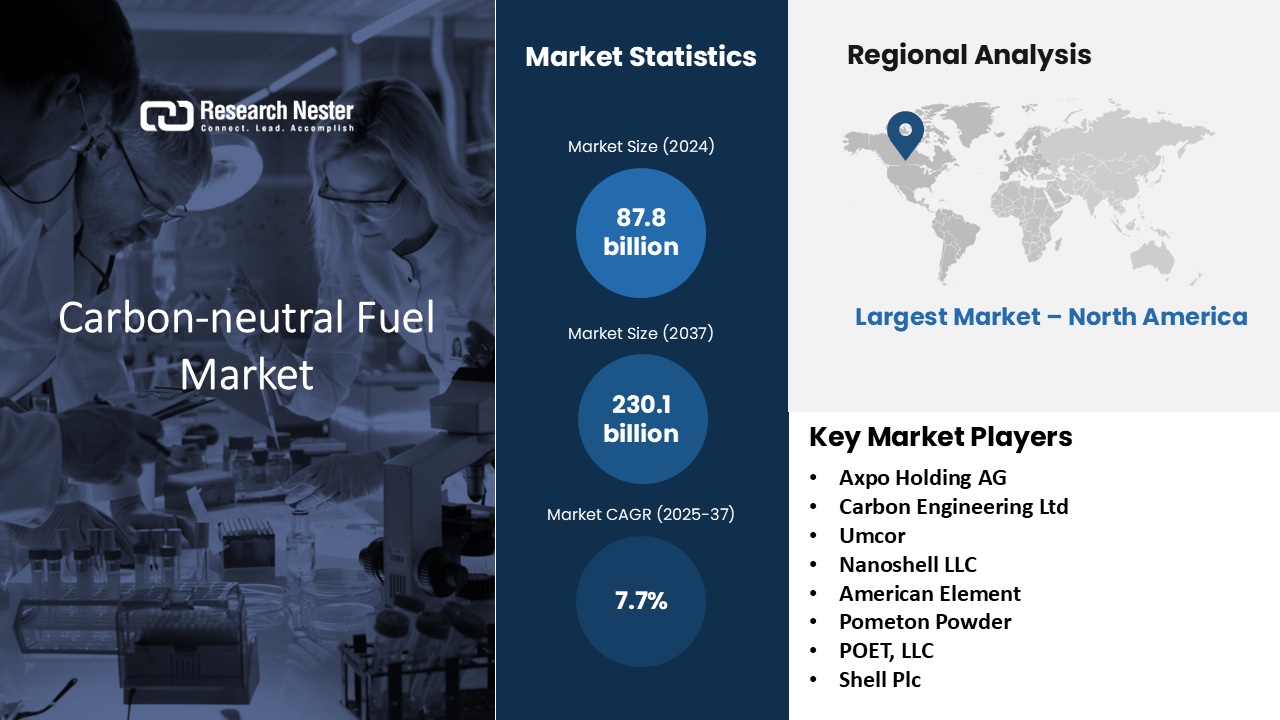
Meta Description: Let’s explore how carbon-neutral fuels are going to overtake the energy needs of industries and substitute fossil fuels. Advancements in the production of SAF and renewable diesel are going to transform the future world into a greener and sustainable planet.
The need for carbon neutral fuel has been rising exponentially. While fossil fuels have been the most favorable energy source in the world since the beginning of civilization, it’s undeniable that they are detrimental to our environment. The fossil fuels such as coal, crude oil, and petroleum release more than 37.5 to 39 billion metric tons of CO2 into the environment. To combat climate change and environmental degradation, carbon-neutral fuels are the one and only reliable and practical solution. These fuels are used as an alternative to traditional fossil fuels in various industries because they secrete less carbon, which could be absorbed into nature.
According to the World Health Organization’s (WHO) report, more than 99% of the global population will be breathing air that does not meet the WHO guidelines and has a high level of contaminants by 2025. This alarming data and many other data similar to this imply the importance of having carbon-neutral fuels in the world. Explore what new advancements are happening worldwide related to carbon-neutral fuels.
Carbon Neutral Fuels: Advancements to Empower the World
Carbon-neutral fuels are designed mainly for the transportation and energy sectors, as these sectors contribute the most to global carbon emissions. To make it clearer, let us give you an example of the U.S. This developed country’s transport sector’s 57% of CO2 emissions come from small vehicles like personal cars. Furthermore, more than 26% of CO2 is emitted from medium to large-sized trucks that facilitate the transportation of goods across the country.
As focus on decarbonization increases, global governments are imposing stricter rules related to sustainability and making various developments in carbon-neutral fuels. According to the projection of Research Nester, the carbon-neutral fuels industry is going to garner a robust revenue of USD 230.1 billion, backed by various advancements and initiatives worldwide. This blog will provide concise but precise data on the recent advancements in carbon-neutral fuels.
- The Inception of E-Fuels – Transforming Renewables to Synthetic Fuels
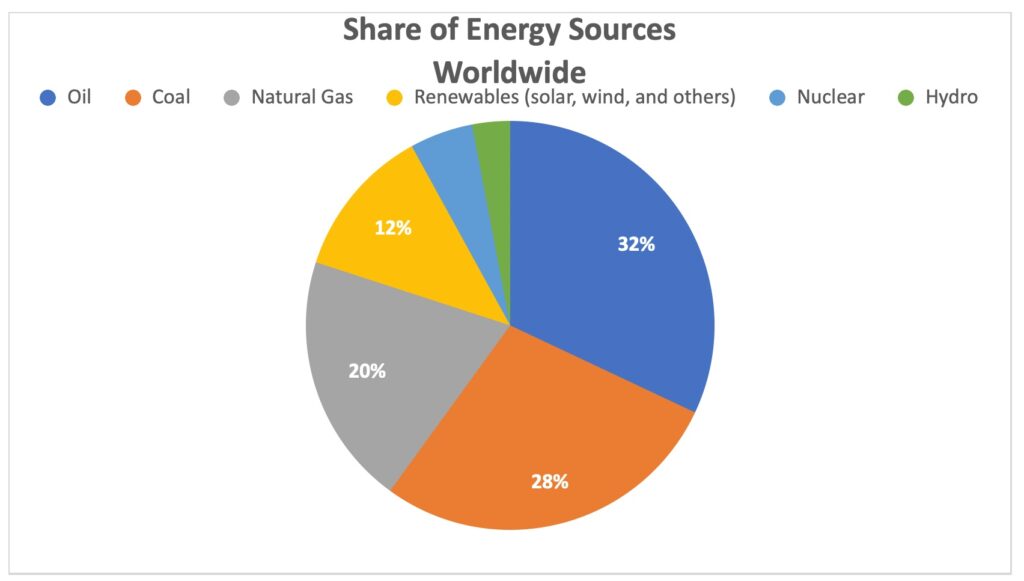
Heard about e-fuels? If not, then you’ll see from now on that e-fuels are the most innovative and interesting breakthroughs in the world of carbon-neutral fuels, which is gaining traction recently. What it does is transform the renewable power sources into synthetic energy so that they can be used in transportation, just like fossil fuels. The following is the global share of various kinds of energy sources.
Any clue on Harley-Davidson’s carbon-neutral ride completely on solar-synthesized fuels? Well, that is a revolutionary invention of Synhelion that transforms concentrated solar energy into carbon-neutral gasoline. They are planning to build a solar fuel plant with a capacity of 100,000 tons in Morocco. Furthermore, now almost 120 e-fuel projects are going on in more than 28 countries globally to get industrial-level e-fuel. In producing e-fuels, China and Europe are the frontrunners and are making multiple developments to produce more effective and higher quantities of e-fuels, such as e-methanol and e-kerosene. Let’s have a look at the progress of China and Europe.
- China is producing more than 62% of the global e-methanol capacity, particularly driven by the rising energy demand in the marine and chemical industries. The sectors, such as transportation, aerospace, chemicals, and energy sectors are
- Europe produces almost 78% of the world’s capacity of e-kerosene because of the European government’s stricter norms related to carbon neutrality. The EU Aviation sector is consuming more of the e-fuels due to the rigorous norms such as ReFuelEU Aviation.
The technological advancements, solid regulatory norms, and robust R&D projects create a great platform for e-fuels to flourish in coming future.
- Hydrogen and Hybrid Batteries – The Future for Sustainable Energy Sources
With the International Energy Agency’s projection of EV sales and most importantly the demand for light-weight vehicles will reach 43% in 2030, 65.3% in 2035, and 84.1% in 2040, the demand for hydrogen and hybrid batteries is increasing rapidly. The World Economic Forum’s projection indicates that in 2025, more than 20 million EVs will be sold globally, and this is due to the advancements improving the efficiency of the battery. Here we’ve deconstructed the advancements in hydrogen and hybrid batteries.
- The lithium-ion and nickel-metal hydride (NiMH) batteries are improved, and they can now work up to 8 to 15 years. These batteries have the power to go more than 300,000 miles on original packs.
- More than USD 40 billion has been invested by the U.S. Government to scale up pure hydrogen production. The capacity of electrolyzers has increased significantly from 0.17 GW in 2021 to 4.5 GW in 2024, to achieve a production capacity of 10 GW per year.
- Globally, demand for green hydrogen is rising. The governments of various countries are taking different initiatives, like the Green Hydrogen Summit 2025 in India. Various industry leaders, investors, and policymakers planned the future strategies to incorporate GH2 for energy production. Moreover, it is projected that global green hydrogen production will cross 58 million tonnes per annum (Mtpa) by 2030, and Europe will lead this venture 41% of the global GH2 pipeline share.
- In the U.S., more than 7 hydrogen plants have been introduced with a USD 7 billion investment to reinforce the region’s hydrogen power. Additionally, in California, a new energy plant has been inaugurated that amalgamates hydrogen with lithium-ion batteries. This power backup system is efficient enough to substitute diesel-enabled power backups with a capacity to provide electricity for 48 hours to the whole town during emergencies.
These advancements in the field of hydrogen and hybrid batteries are changing the whole concept of power generation.
- Advanced Biofuel – the Next-Generation Biofuels
Advanced biofuels do not depend on agricultural products to generate fuel; rather, they generate energy from different states of waste and other non-traditional sources. The following is the breakdown of the recent advancements and impressive features of advanced biofuels.
- Ever heard of a waste-to-energy system? Yeah, that’s what it does, but in a more efficient manner. Various leading key players like Licella use advanced technologies, including the hydrothermal liquefaction process, to transform agricultural wastes such as sugarcane garbage, wheat straw into biocrude. This biocrude can be converted to sustainable aviation fuel (SAF) and renewable diesel.
- Sustainable aviation fuel (SAF) leads in the advanced biofuels. In fact, the International Air Transport Association (IATA) shares that the global SAF manufacturing is going to reach 2 million tonnes in 2025. LanzaJet and ATOBA Energy have started a collaboration on expediting the deployment of sustainable aviation fuel (SAF) and developing new commercial models for the market, while NTPC Green cooperated with Honeywell to discover new potential for SAF production in India.
- Renewable diesel is another energy source that gaining momentum recently. The U.S. Energy Information Administration shared that renewable diesel generation averaged 210,000 barrels per day in 2024 and is projected to accelerate to 220,000 barrels per day in 2025 and 250,000 barrels per day in 2026. Renewable diesel represents one of the most rapidly expanding advanced biofuels in the United States, boasting 24 operational facilities and an additional 21 either in development or currently under construction.
These biofuels are produced from wastes, algae, and cellulosic ethanol and are the most reliable way to achieve the zero-emission pledge.
Carbon Neutral Fuels: The Only Hope for Greener World
A great alternative to fossil fuels carbon neutral fuels has gained popularity and it’ll surely help the world to become greener without compromising in its energy source. Various other carbon neutral fuels such as biomethane, coal-to-liquid, and many more is going to empower the transportation, aerospace and energy sector.
Source: https://www.researchnester.com/reports/carbon-neutral-fuel-market/7062